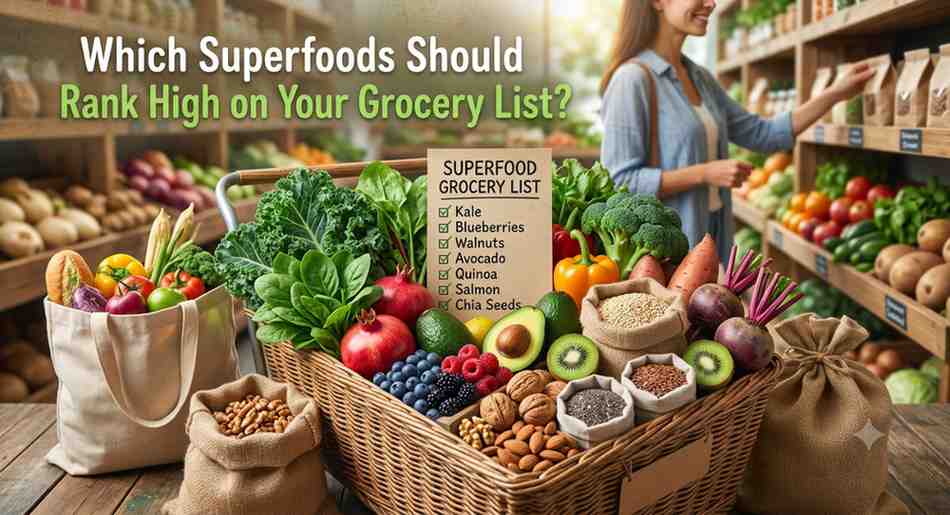
Which Superfoods Should Rank High on Your Grocery List?
Science-backed picks that deliver the biggest nutritional return — and how to actually get them into your week.
The word “superfood” gets thrown around loosely — but strip away the marketing and a clear pattern emerges: certain whole foods pack an outsized concentration of vitamins, minerals, antioxidants, and phytonutrients relative to their calorie count. These are the ones worth building your cart around.
Every trip to the supermarket is a series of small decisions that, taken together, define your long-term health trajectory. Most of us know we should eat well, but “eating well” is a phrase so broad it becomes almost useless at the checkout counter. What actually deserves a place in your basket — and why?
This guide cuts through the noise. Rather than listing every food ever labelled a superfood, we focus on the ones supported by consistent nutritional science, realistic for everyday cooking, and genuinely hard to replicate with supplements alone.
Dark Leafy Greens: The Undisputed Foundation
If you could only add one category to your cart this week, dark leafy greens — kale, spinach, Swiss chard, collard greens, and arugula — would be the most defensible choice. They deliver folate, vitamins K, C, and A, iron, calcium, and a broad spectrum of antioxidants, all at remarkably low caloric cost.
Spinach is arguably the most versatile: it wilts invisibly into sauces, blends into smoothies without altering the flavour, and provides high levels of lutein and zeaxanthin, which are associated with eye health and reduced risk of macular degeneration. Kale, meanwhile, offers one of the highest vitamin K concentrations of any food — critical for bone mineralisation and healthy blood clotting.
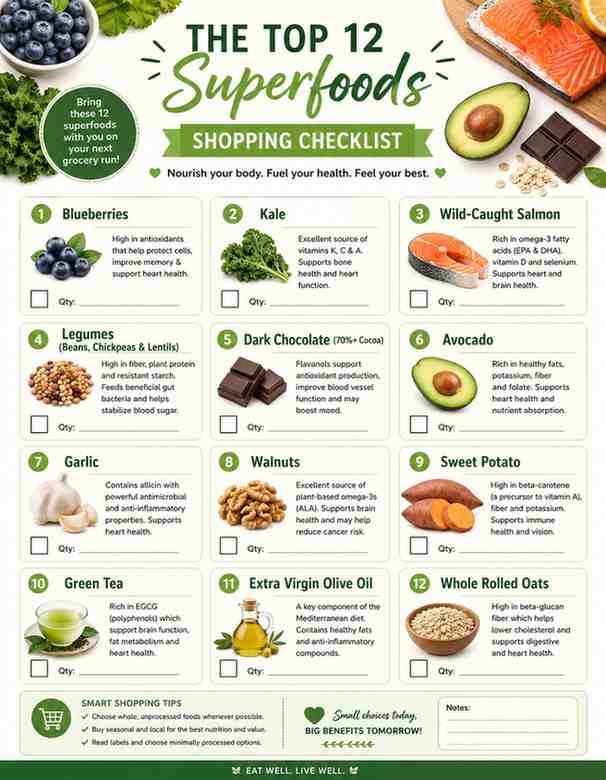
The 12 Superfoods Worth Prioritising
Blueberries
Among the highest antioxidant loads of any fruit. Anthocyanins have been linked to improved memory, reduced LDL oxidation, and lower blood pressure over time.
Brain HealthKale
Exceptional source of vitamins K, C, and A. One cup raw delivers more vitamin K than almost any other food, supporting bone density and cardiovascular function.
Bone SupportSalmon (Wild-Caught)
One of the richest dietary sources of omega-3 fatty acids (EPA and DHA), plus vitamin D and selenium. Strongly associated with reduced cardiovascular risk.
Heart HealthLegumes
Lentils, chickpeas, and black beans offer fibre, protein, and resistant starch — a prebiotic that feeds beneficial gut bacteria and supports steady blood sugar.
Gut HealthDark Chocolate (70%+)
Flavanols in high-cacao chocolate support nitric oxide production, improving blood vessel flexibility. Choose 70% cacao or higher for meaningful benefit.
CirculationAvocado
Dense in monounsaturated fats, potassium (more than a banana), and folate. Helps increase absorption of fat-soluble nutrients from other vegetables in the same meal.
Nutrient BoosterGarlic
Allicin, formed when garlic is crushed, has demonstrated antimicrobial and anti-inflammatory properties. Regular consumption is associated with modest blood pressure reduction.
Anti-inflammatoryWalnuts
The only nut with a significant plant-based omega-3 (ALA) content. Also contains ellagic acid, a polyphenol with emerging research interest in cancer prevention.
Brain & HeartSweet Potato
Exceptionally rich in beta-carotene (a precursor to vitamin A), fibre, and potassium. Its natural sweetness makes it one of the most accessible whole foods to cook with.
Immune SupportGreen Tea
EGCG (epigallocatechin gallate) is one of the most studied polyphenols in the world, associated with metabolic health, reduced inflammation, and neuroprotection.
MetabolismExtra Virgin Olive Oil
The cornerstone fat of the Mediterranean diet. Oleocanthal, a natural compound in quality EVOO, mimics the anti-inflammatory action of ibuprofen at low doses.
Anti-inflammatoryOats (Whole Rolled)
Beta-glucan fibre in oats forms a gel in the gut that binds to bile acids, facilitating their excretion and reducing LDL cholesterol reabsorption. One of the most evidence-backed heart foods.
Cholesterol“Let food be thy medicine and medicine be thy food.”
— Hippocrates, c. 400 BCE (and still directionally correct by modern nutritional science)How to Actually Shop for These Foods
Knowing a food is nutritious is one thing; building a reliable shopping habit around it is another. The most effective strategy isn’t to overhaul your entire cart at once — it’s to swap out lower-density staples for higher-density ones, one category at a time.
Start with produce: replace low-nutrient salad bases with a bag of baby spinach or chopped kale. Swap out white rice twice a week for lentils. Shift from snacking on crackers to a small handful of walnuts. These are not dramatic changes — they’re targeted substitutions that compound meaningfully over months.
Practical Grocery List Principles
- Shop the perimeter of the supermarket first — fresh produce, proteins, and dairy live there; processed foods live in the aisles.
- Buy frozen berries and spinach without guilt — flash freezing preserves most nutrients and dramatically reduces food waste.
- Add at least two dark leafy greens to your basket every visit, even if one ends up in a smoothie.
- Keep a can of legumes as a pantry staple for nights when you haven’t planned ahead.
- Check the cacao percentage before buying “dark” chocolate — anything below 60% is closer to confectionery than superfood.
- Choose whole rolled oats over instant — the less processed the grain, the more intact the beta-glucan fibre.
- Pick extra virgin olive oil in dark glass bottles; light degrades polyphenols faster than heat or air.
Superfoods Worth a Lower Rank (and Why)
Goji berries, acai powder, and spirulina are frequently marketed as essential superfoods. They’re not bad choices, but the evidence base for them is substantially thinner than for the twelve listed above, and their cost-to-benefit ratio is hard to justify for most people. A cup of fresh blueberries at a fraction of the price of acai powder delivers more studied benefit.
Similarly, “superfood” snack bars and powdered greens supplements often contain the right ingredients but in quantities too small to produce the effects observed in studies of whole-food consumption. Whole foods remain the most reliable delivery mechanism — the fibre, water content, and micronutrient co-factors in fresh food create effects that isolated extracts typically cannot replicate.
Mapping Superfoods Across Your Day
Morning: Whole rolled oats with a handful of blueberries, a teaspoon of ground flaxseed, and green tea. This single meal covers fibre, antioxidants, omega-3s, and polyphenols before 9am.
Lunch: A base of baby spinach or kale with half an avocado, a tin of wild salmon or a scoop of lentils, dressed with extra virgin olive oil and lemon. Varied, fast, and hitting four superfood categories simultaneously.
Dinner: Roasted sweet potato alongside a protein of choice, with a side of garlic-sautéed greens. A square or two of 70%+ dark chocolate with your evening tea completes a day that would have covered ten of the twelve foods on the list.
The goal isn’t perfection — it’s density. The more of these foods that appear in your regular rotation, the less room there is for foods that deliver calories without the accompanying nutritional payload.
Superfoods don’t require an overhaul of your life, a specialist supermarket, or a significant increase in your grocery bill. Most of them — oats, lentils, spinach, garlic, sweet potato — are among the most affordable items in any supermarket. What they require is intention: the deliberate decision, repeated over time, to put the most nutritionally dense options in your basket rather than defaulting to convenience.
That decision, compounded across years, is what the research consistently shows makes the difference.
Build Your Superfood Shopping List
Download our free printable checklist and bring the top 12 superfoods with you on your next grocery run.
Get the Free ChecklistThis article is intended for informational and educational purposes only and should not be considered medical advice, diagnosis, or treatment. The information provided is not a substitute for professional healthcare guidance. Always consult a qualified healthcare provider before making changes to your diet, lifestyle, supplements, or treatment plan, especially if you have an existing medical condition or are taking medication.
Images used in this article are royalty-free, properly licensed, AI-generated, or sourced from platforms that permit their use. If you believe any content or image requires attribution or should be removed, please contact us, and we will address the matter promptly.
Medical Notice: The content on this website is not intended to diagnose, treat, cure, or prevent any disease and should not replace professional medical advice.