
Managing Sciatica at Home: What Works, What to Avoid, and When to See a Doctor
If you have ever felt a sharp, shooting pain that starts in your lower back, travels through your hip, and fires down the back of your leg, you know how disruptive sciatica can be. Named after the sciatic nerve—the longest and widest nerve in your body—this condition occurs when the nerve becomes irritated or compressed.
When sciatica strikes, your immediate instinct might be to climb into bed and stay there. However, modern recovery strategies favor a mix of targeted home remedies, smart movement adjustments, and a clear understanding of when it is time to seek professional medical help.
Here is a comprehensive guide to safely managing sciatic nerve pain from the comfort of your home.
1. The Right Way to Use Ice and Heat Therapy
Temperature therapy is one of the easiest ways to find temporary relief, but timing is everything.
- The First 48 to 72 Hours: Focus on cold therapy. Apply an ice pack wrapped in a thin cloth to the painful area for 20 minutes several times a day. Cold helps constrict blood vessels, which reduces acute inflammation and numbs the sharpest stabs of pain.
- After the Third Day: Switch to heat. Once the initial flare-up begins to settle, introduce a heating pad, hot water bottle, or a warm bath for 20 minutes at a time. Heat increases blood flow to the area, relaxes tight lower back and gluteal muscles, and eases deep tissue tension.
2. Ditch the Long Walks (and Modifying Movement)
A common misconception is that you should “walk off” back and leg pain. While gentle activity is highly beneficial, walking outdoors on uneven pavement, hard concrete, or sloped ground forces your spine to absorb heavy impacts and twist awkwardly. This can directly pinch the already irritated nerve.
Instead of pushing through outdoor walks, modify your movement with these tips:
- The “Walk-to-Sit” Rule: Limit your walking to short, frequent bursts (2 to 5 minutes) around the flat floors of your home. Sit down or rest before the shooting pain starts traveling down your leg.
- Take Shorter Steps: Avoid locking your knees or taking long strides. Keep your steps short and soft, maintaining a very slight bend in your knees to absorb shock.
- Try Structural Decompression: If standing or walking triggers severe discomfort, try leaning forward slightly while supporting your upper body weight with your arms on a high kitchen counter or a shopping cart. This slight forward tilt creates physical space in your lower spine, temporarily taking pressure off the nerve root.
3. Keep Moving: Active Recovery vs. Strict Bed Rest
It might seem counterintuitive, but prolonged bed rest is often the enemy of sciatica recovery. Too much downtime causes the supporting muscles of your spine to stiffen and weaken, which can ultimately prolong your recovery timeline.
- Gentle Indoor Activity: Focus on staying upright and moving gently on flat surfaces. If your job requires a lot of sitting, stand up and stretch every 30 minutes, as prolonged sitting heavily compresses the lumbar discs.
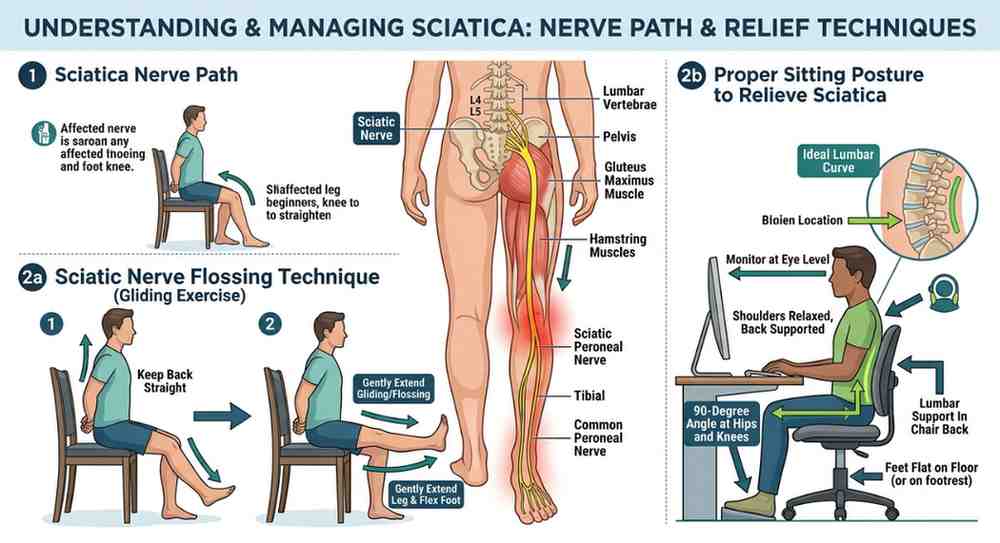
- Sciatic Nerve Flossing: Instead of holding intense, rigid stretches that can over-pull an inflamed nerve, try a mobilization technique known as “nerve flossing”. Lie flat on your back, support the back of your thigh with your hands, and slowly straighten and bend your knee while gently pumping your ankle up and down. This coaxes the nerve to glide smoothly through surrounding tissues rather than getting caught.
4. Over-the-Counter Options
If it is medically safe for you to do so, nonsteroidal anti-inflammatory drugs (NSAIDs) like ibuprofen can be effective tools to manage swelling and keep your pain manageable enough to stay mobile. Always follow package instructions or speak with a local pharmacist to ensure these options do not conflict with your existing health profile.
5. Future-Proofing Your Back: Preventative Habits to Adopt
Once your current sciatica flare-up begins to subside, your primary goal should switch from pain relief to long-term prevention. Irritated nerves can flare up again if the underlying structural strain isn’t resolved. Incorporating these healthy lifestyle habits into your daily routine can significantly reduce your risk of a future episode:
- Break Up Prolonged Sitting: Sitting for hours is one of the biggest modern aggravators of sciatic nerve compression. Set a timer to stand up, stretch, or take a short walk every 20 to 30 minutes to relieve accumulated pressure on your lower lumbar discs. If you work at a desk, consider using an adjustable standing desk.
- Optimize Your Sitting Ergonomics: When you must sit, mind your posture. Sit all the way back in your chair with a straight back, relaxed shoulders, and both feet flat on the floor. Ensure your chair has proper lumbar support to maintain the lower spine’s natural curve; if it lacks built-in support, place a small pillow or a rolled-up towel behind the small of your back. Avoid slouching or crossing your legs, which tilts your pelvis unevenly.
- Master Safe Lifting Mechanics: Improper bending and lifting can cause sudden disc injuries that pinch the sciatic nerve. Never bend straight forward from your waist with locked legs to pick up an item. Instead, keep your back straight, bend at your knees and hips, use the power of your legs to lift, and keep the object held close to your body.
- Build a Strong Core Support System: Weak abdominal and back muscles offer less structural support for your spine, leaving it vulnerable to misalignment. Regular, low-impact core-strengthening exercises—such as glute bridges, bird dogs, pelvic tilts, and clamshells—create a natural protective support system around your lower back.
- Manage Total Body Strain: Carrying extra body weight places continuous, heavy mechanical stress on your lower vertebrae and spinal discs. Additionally, avoid tobacco use; nicotine restricts blood flow to spinal structures, making it much harder for your spinal discs to recover from daily wear-and-tear.
6. Knowing the Red Flags: When to See a Doctor
While many cases of mild sciatica resolve within a few weeks with conservative home care, pain that persists past 20 days or nearly three weeks requires a formal medical evaluation. A primary care doctor or physical therapist can evaluate the nerve pathway, rule out severe structural issues, and provide targeted treatments like prescription muscle relaxers or physical therapy plans.
Furthermore, there are several “red flag” symptoms that mean you should skip home care entirely and head to an urgent care clinic or emergency room immediately:
- Severe or Progressive Weakness: Finding that your leg or foot feels heavy, or experiencing “foot drop” (where your foot drags or you cannot lift your toes while walking).
- Saddle Anesthesia: Sudden numbness or a “pins-and-needles” sensation in your groin, buttocks, or inner thighs—the exact areas that would make contact with a riding saddle.
- Bowel or Bladder Dysfunction: Any sudden loss of bowel or bladder control, or sudden difficulty attempting to urinate.
Have you ever dealt with a sciatica flare-up? What home remedy helped you the most? Let us know in the comments below!”
This article is intended for informational and educational purposes only and should not be considered medical advice, diagnosis, or treatment. The information provided is not a substitute for professional healthcare guidance. Always consult a qualified healthcare provider before making changes to your diet, lifestyle, supplements, or treatment plan, especially if you have an existing medical condition or are taking medication.
Images used in this article are royalty-free, properly licensed, AI-generated, or sourced from platforms that permit their use. If you believe any content or image requires attribution or should be removed, please contact us, and we will address the matter promptly.
Medical Notice: The content on this website is not intended to diagnose, treat, cure, or prevent any disease and should not replace professional medical advice.